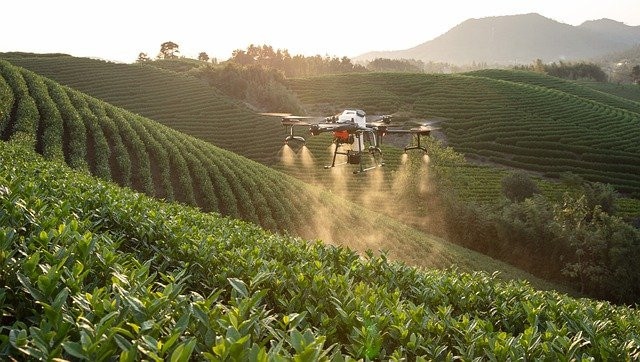


In the vast landscapes of modern agriculture, efficiency is the key to success. Farmers are constantly seeking innovative solutions to maximize yields, minimize costs, and reduce environmental impact. One such groundbreaking technology that is reshaping the agricultural landscape is drones. These unmanned aerial vehicles (UAVs) are not just gadgets for enthusiasts; they have become indispensable tools for farmers worldwide, offering a multitude of benefits that significantly enhance farm efficiency.
Precision Agriculture:
Precision agriculture is a farming management concept based on observing, measuring, and responding to inter- and intra-field variability in crops. Drones equipped with advanced sensors, cameras, and GPS technology play a crucial role in implementing precision agriculture techniques. They provide farmers with real-time, high-resolution aerial imagery of their fields, enabling them to identify crop health issues, nutrient deficiencies, pest infestations, and water stress with unprecedented accuracy.
By detecting problems early on, farmers can take timely corrective actions, such as targeted pesticide or fertilizer application, irrigation adjustments, or pest management interventions. This proactive approach not only optimizes resource utilization but also minimizes the use of chemicals, thereby promoting sustainable farming practices.
Crop Monitoring and Management:
Traditionally, monitoring large agricultural fields has been a time-consuming and labor-intensive task. Farmers would need to physically inspect crops, which could be impractical or even impossible in expansive or remote areas. Drones simplify this process by providing a bird’s-eye view of the entire farm in a fraction of the time it would take on foot or by conventional means.
With drones, farmers can quickly assess crop growth patterns, identify areas of concern, and track changes over time. This data-driven approach enables them to make informed decisions about irrigation scheduling, planting strategies, and harvest timing. By optimizing these factors, farmers can boost yields, improve crop quality, and ultimately increase profitability.
Precision Spraying and Seeding:
Another area where drones excel is in precision spraying and seeding. Equipped with specialized spraying systems, drones can precisely apply fertilizers, herbicides, and pesticides to targeted areas of the field with unparalleled accuracy. Unlike traditional tractor-mounted sprayers, which may cause soil compaction and damage crops, drones operate at low altitudes, minimizing environmental impact and reducing chemical drift.
Furthermore, drones can access terrain that is challenging or inaccessible to conventional machinery, such as steep slopes or narrow spaces between crops. This versatility allows farmers to treat their fields more efficiently and effectively, resulting in better pest control, weed management, and nutrient distribution.
Data-Driven Decision-Making:
One of the most significant advantages of drone technology in agriculture is its ability to generate vast amounts of actionable data. By collecting and analyzing aerial imagery, multispectral data, and other sensor outputs, farmers gain valuable insights into the health and productivity of their crops. Advanced analytics tools help them interpret this data, identify trends and patterns, and make data-driven decisions to optimize farm operations.
From predicting yield potential to assessing the effectiveness of different management practices, drones empower farmers to continuously improve their productivity and sustainability. Moreover, this wealth of information can facilitate better communication and collaboration among stakeholders, including agronomists, researchers, and policymakers, leading to more informed agricultural policies and practices.